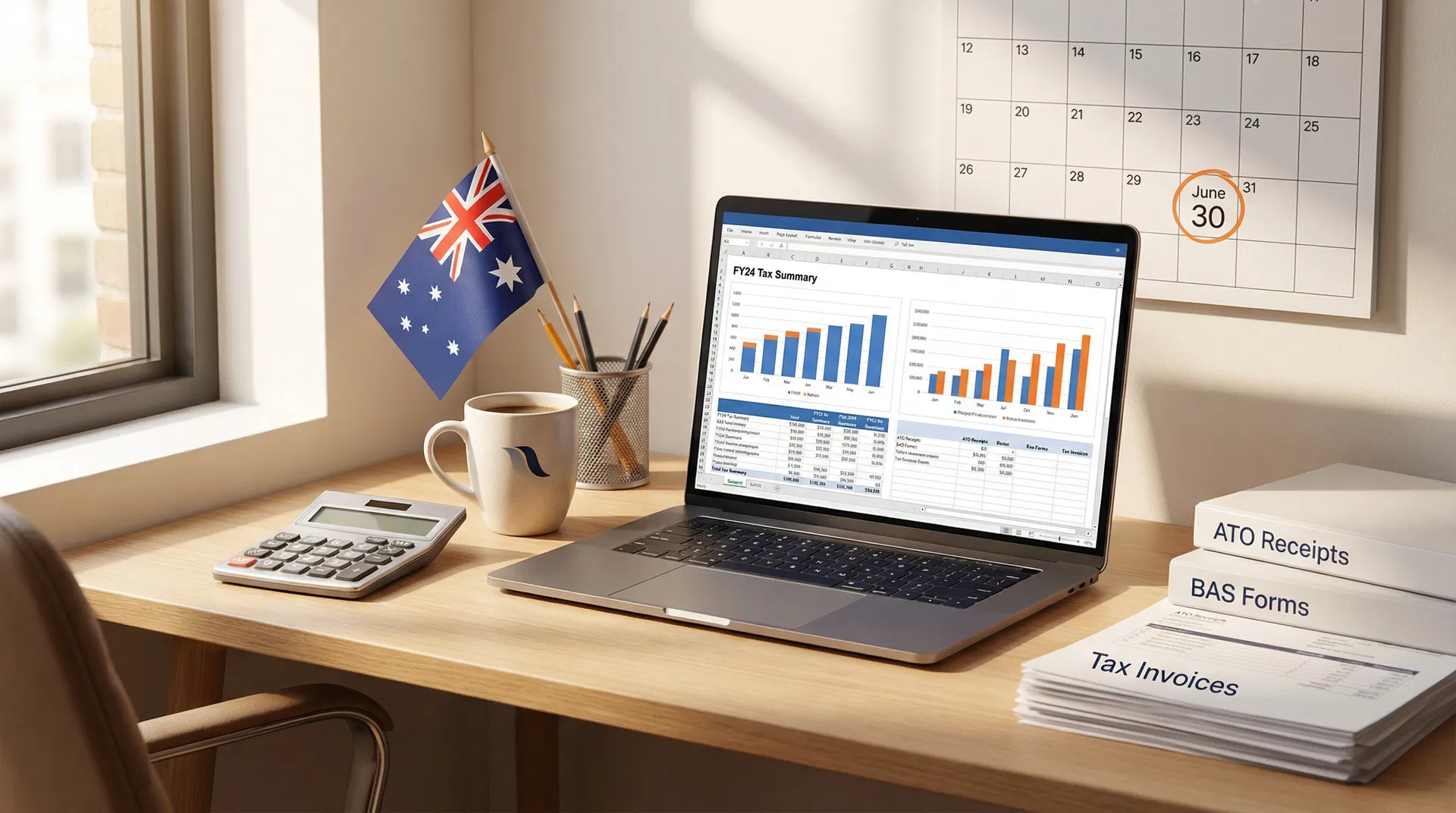
As the 2025-26 financial year draws to a close on 30 June 2026, it's crucial for Australian small business owners to proactively engage in tax planning. Effective planning can significantly reduce your tax liability, improve cash flow, and ensure compliance with ATO regulations. This checklist provides practical steps and considerations to help you prepare.
Review Your Business Performance
Before diving into specific tax strategies, take a moment to review your business's financial performance throughout the 2025-26 financial year. Understanding your profit and loss position is fundamental to effective tax planning.
- Profit and Loss Statement: Analyse your revenue and expenses to get a clear picture of your taxable income. Identify any unexpected gains or losses.
- Balance Sheet: Review your assets, liabilities, and equity to understand your business's financial health. This can inform decisions about asset purchases or debt reduction.
- Cash Flow: Assess your cash flow position. This will help determine your capacity for making pre-payments or purchasing assets before 30 June.
Maximise Deductible Expenses
One of the most effective ways to reduce your taxable income is to bring forward deductible expenses where appropriate. Ensure all eligible expenses are accounted for before 30 June.
- Instant Asset Write-Off: For the 2025-26 financial year, the instant asset write-off threshold is $20,000 for businesses with an aggregated turnover of less than $50 million. This allows eligible businesses to immediately deduct the full cost of eligible depreciating assets costing less than $20,000, first used or installed ready for use between 1 July 2025 and 30 June 2026. Consider purchasing new or second-hand assets like tools, equipment, or vehicles before 30 June.
- Pre-Pay Expenses: You may be able to pre-pay certain expenses for up to 12 months in advance and claim a deduction in the current financial year. Common examples include rent, insurance premiums, subscriptions, or interest on loans. Ensure these payments relate to services or goods that will be consumed within the next 12 months or by 30 June 2027.
- Repairs and Maintenance: Complete any necessary repairs and maintenance on business premises or equipment before 30 June. These are generally immediately deductible.
- Staff Superannuation Contributions: To claim a deduction for superannuation contributions made on behalf of employees, payments must be received by the super fund by 30 June 2026. We recommend making these payments well in advance to avoid any processing delays.
- Bad Debts: Review your accounts receivable and write off any genuine bad debts before 30 June. For a debt to be considered 'bad', it must be genuinely irrecoverable, and you must have made reasonable efforts to recover it.
- Stocktake: If your business holds trading stock, conduct a stocktake on 30 June. You can choose to value stock at cost, market selling value, or replacement value, and select the method that results in the lowest taxable income. Also, consider writing off obsolete or unsaleable stock.
Manage Your Income
While maximising deductions is key, strategically managing your income can also play a role in tax planning.
- Defer Income: If possible and practical, defer invoicing for services or goods delivered late in June until July. This pushes the income into the next financial year, potentially deferring tax.
- Accelerate Income (if applicable): In some specific circumstances, if you anticipate a lower income or higher deductions in the current year compared to the next, you might consider accelerating income. However, this is less common for tax minimisation and requires careful consideration.
Superannuation Contributions for Business Owners
As a business owner, contributing to your superannuation can be a tax-effective strategy.
- Concessional Contributions: You can claim a tax deduction for personal superannuation contributions up to the concessional contributions cap. For the 2025-26 financial year, the general concessional contributions cap is $30,000. This includes your employer (SG) contributions and any salary sacrifice amounts. Ensure contributions are made and received by your super fund before 30 June 2026.
- Carry-Forward Concessional Contributions: If your total super balance was less than $500,000 on 30 June 2025, you might be able to utilise unused concessional cap amounts from previous financial years (going back five years from 2018-19). This allows you to make larger deductible contributions.
Payroll and Employee Obligations
Ensure your payroll obligations are up to date and correctly reported.
- Single Touch Payroll (STP): Ensure all payroll reporting through STP is accurate and up-to-date for the entire financial year. Finalise your STP data by 14 July 2026 for employees who are not closely held payees, and by 30 September 2026 for closely held payees.
- Superannuation Guarantee (SG): The SG rate for the 2025-26 financial year is 12%. Ensure you have paid the correct amount of superannuation for all eligible employees. The deadline for Q4 (April-June 2026) superannuation payments is 28 July 2026, but paying before 30 June allows you to claim the deduction in the current financial year.
- PAYG Withholding: Reconcile your PAYG withholding amounts and ensure they align with your STP reporting.
Review Your Business Structure
While not an EOFY-specific task, the end of the financial year is a good time to review if your current business structure (e.g., sole trader, partnership, company, trust) remains the most tax-effective and appropriate for your business goals and circumstances. Changes to tax laws or your business's growth might warrant a structural review.
Prepare for the New Financial Year
Looking beyond 30 June, consider what changes might impact your business in the 2026-27 financial year.
- Budgeting and Forecasting: Develop a budget and cash flow forecast for the upcoming financial year to set financial goals and anticipate tax obligations.
- Tax Rate Changes: Stay informed about any announced changes to company tax rates or individual income tax thresholds that may affect your business or personal tax situation.
Record Keeping
Good record keeping is paramount for compliance and efficient tax preparation. Ensure all invoices, receipts, bank statements, and other financial documents are organised and readily accessible.
- Digital Records: Consider moving to digital record-keeping solutions to streamline your processes and ensure data security.
- ATO Requirements: The ATO requires you to keep most records for at least five years. Ensure your system facilitates this.
Seek Professional Advice
Tax laws are complex and constantly evolving. This checklist provides general guidance, but every business's situation is unique. We strongly recommend consulting with the experienced team at MC & S Accountants + Advisors. We can help you navigate the complexities of tax planning, identify specific strategies tailored to your business, and ensure you meet all your compliance obligations for the 2025-26 financial year and beyond.